

For a long time, I have internally debated this idea of whether or not it is the responsibility of Facebook, Twitter, and other tech giants to tell people what they can and cannot see on their platforms? On one hand, our country was built around freedom of speech allowing people to have a voice and make judgments on their own. On the other hand, the reality is social media platforms are designed to be addictive to keep people coming back for more newsfeeds that are filled with ‘fake news.’ Social media has now “become the primary source of information and social communication” and these tech giants know it. With the power social media has over people’s decisions, it’s time for them to put their big boy pants on, use their algorithms for good, and stop the spread of misinformation.
Credit: NPR
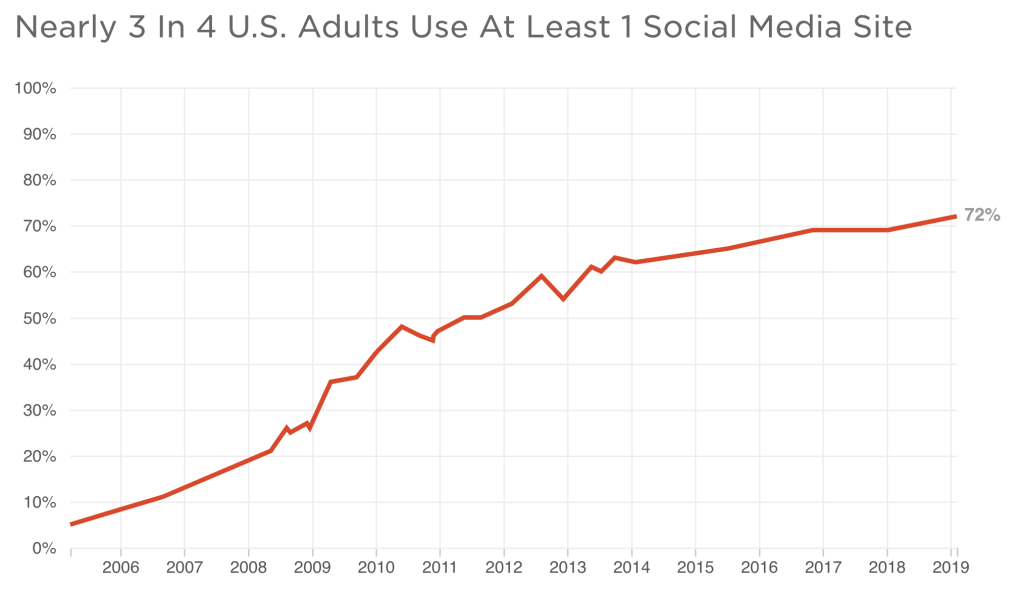
Each year the number of people using social media increases. In a 2019 study, the Pew Research Center showed 72% of the public uses some type of social media. This same research revealed people checked their social media accounts at least once a day. Even with such a loyal audience, social media companies have teams of engineers working to keep people on their platforms longer. Features like the continuous scroll, push notifications and reverse chronological order coax your brain to come back for more, tricking you into thinking there are more “rewards” to be had (source). Additionally, the algorithms social media companies create are designed to show you only the content you are interested in. For example, if you like cat videos, your newsfeed will be filled with more suggested cat videos. Why wouldn’t someone go back for more of what they like? Unfortunately, these ‘filter bubbles’ only show more of the same and there is a danger in never letting people see the opposite point of view especially when it comes to politics and people’s health.
Social media is not a reliable source of information. During the beginning stages of the Coronavirus pandemic when leaders were unsure how best to handle the situation, several harmful home remedies such as drinking bleach or exposing yourself to high heat began to go viral. “A study from researchers at Carnegie Mellon University found that nearly half of the Twitter accounts spreading messages about the coronavirus pandemic are likely bots — automated accounts designed to make it appear that more humans are acting a certain way than truly are” (source). Similarly, we now know Russia created fake Facebook accounts to “post divisive content about topics such as Black Lives Matter, immigration and gun control” with the end goal of influencing the 2016 election. Because these platforms thrive on polarizing content, the more radical an idea, the more it went viral. “Each moral or emotional word used in a tweet increased its virality by 20% on average.” Do the people want bots and the Russian government influencing our thoughts?
The two examples listed above are only the two most relevant topics happening around us and are being reported on in major news channels. Think about how much more misinformation is out there that does not make national news? As a busy mother, I do not have the time or energy to fact check and research every article posted on social media and I’m certain most people are in the same boat. Using social media as a news source is the path of least resistance.
What I find most interesting about tech giants is the number of ex-Silicon Valley employees who have come out against their past employers. Chris Wetherell, creator of the Retweet button for Twitter, now regrets his works and wishes he did not create a tool that could spread bias and outlandish comments (source). A former YouTube employee, Guillaume Chaslot, was interviewed on the New York Times podcast Rabbit Hole where he described his role in creating the algorithm for recommended videos. He soon realized he created a filter bubble where people were constantly served only one side of the story. He gave an example of the Cairo, Egypt protests that if a person started watching videos highlighting the point of view of the protesters they were only served that point of view and never the side of the police. While still at YouTube, Chaslot worked on a side project to break the filter bubble only to be fired. His side project did not contribute to the company’s overarching goal of more viewing time. Another former Silicon Valley employee, Tristan Harris, was featured on CBS’s 60 Minutes, discussing “brian-hacking” and the way tech giants have numerous techniques to seduce you to come back to their platforms. Today Harris travels the country trying to convince anyone who will listen that the “business models of tech companies need to change. He wants products designed to make the best use of our time not just grab our attention.”

Harris is right, the business models of social media platforms all boil down to the same basic concept: more time online equals more people viewing their ads which equal more revenue. This business model is the same for the individuals who post content, except in order to get the clicks and likes needed to earn more money, they have to write more extreme headlines comments to grab people’s attention whether or not they’re true. I understand people need to make a living, but it should not be at the cost of dividing people and pushing them further toward radical views (source). This is where I have come to believe, if tech giants have the capacity to create algorithms that have the power to manipulate, then it is time for them to turn up their moral compasses and break the filter bubble. They need to give people the opportunity to see the complete picture. Frankly after all I have learned researching this topic, I am so wary of clicking anything. When I do click, I see the patterns emerge in my newsfeed. Luckily it’s mostly filled with shoes, furniture and game for my kids #momlife.
 To Mulberry Street Marketing & Design
Leave a comment