

Whether you are designing an app, creating a marketing campaign, or writing an article, it’s essential to understand your audience. Recently, I read a blog post about a writer, Kip Langello, who could not get a book published. He decided to create a fictional character to write for. He gave his character a name, job, family, and details surrounding her likes and her struggles. The book he wrote for this fictional character was the first he ever had published. The moral of the story is that Langello created a comprehensive understanding of who the book was for, and by keeping his character in mind, he was able to accomplish his goal. Unbeknownst to Langello, he created a rough persona.
The persona weapon and why you would create one
By definition, Personas are fictional people who represent a group type that might use your product, service, website, or brand. Personas include research findings and behavior patterns that encompass a group of people. It feels a little like stereotyping but with market research and supporting facts. (source) Numerous one-on-one interviews, surveys, and user observation are just some of the in-depth analyses done. Then it’s up to a UX-er to find the behavioral patterns, figure out people’s motivations and goals, and start creating the personas. This research ladders up to in-depth knowledge of the user, the secret weapon to a successful comprehensive design.
Personas (as we use them) are an archetypical user of a system, an example of the type of person who would interact with it.
-Jeff Sauro, PHD, Statistical Analyst
Personas help our brain empathize with the people using our product. When talking about a group of individuals, it is difficult for our brains to relate. However, when we talk about one person, give them a name and a personal story, including motivations and challenges, our brains can begin to understand better who we are creating for. Personas also help a team focus on the same user and keep everyone aligned. Whenever a design decision is questioned, the persona can validate or nullify it.
CreatinG the secret weapon
In my journey to create my first ever personas, I started with a service I regularly use- online grocery shopping with Stop & Shop. I created a persona for myself, an avid online grocery shopper who has tried numerous grocery services. Then, in speaking with others, I found female baby boomers have recently started online grocery shopping. I researched this behavior and found more boomers are shopping from
home because of the pandemic. I decided my second persona was going to be a retiree with an underlying health condition. Here are some of the critical pieces of information I gathered for both personas.
- What are they trying to accomplish?
- What motivates the person to try the service?
- What hurdles are getting in their way?
- Who influences their decisions?
- What do they currently do for groceries?
- What would trigger them to use the service?
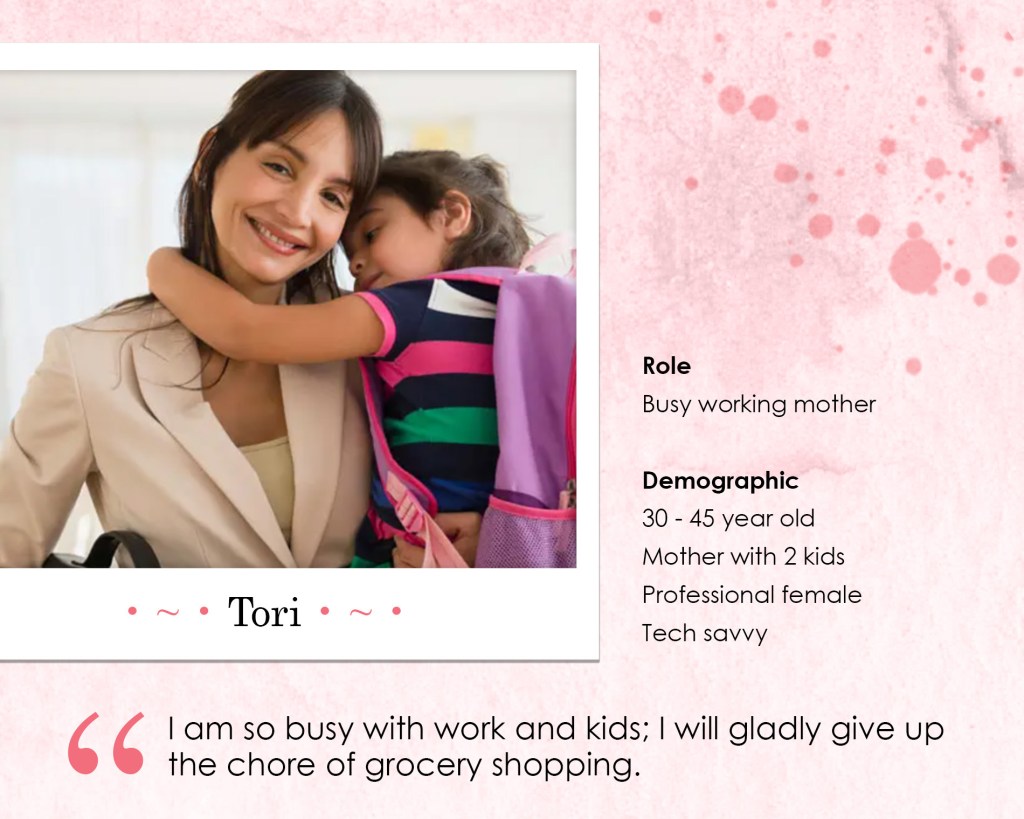
Once I gathered my data, I began to give both personas characteristics. For my first persona, Tori, I gave her a nickname synonymous with girls born in the 1980s. She is a busy working mother looking for all the help she can get in raising her family. Most millennials were raised surrounded by computers and technology, so they are not afraid to try a grocery-shopping app. However, millennials prefer streamlined experiences and are easily frustrated with apps that do not run smoothly. They have high expectations for technology. In Tori’s case, she needs a fast and easy service to help her complete her weekly shopping chore.
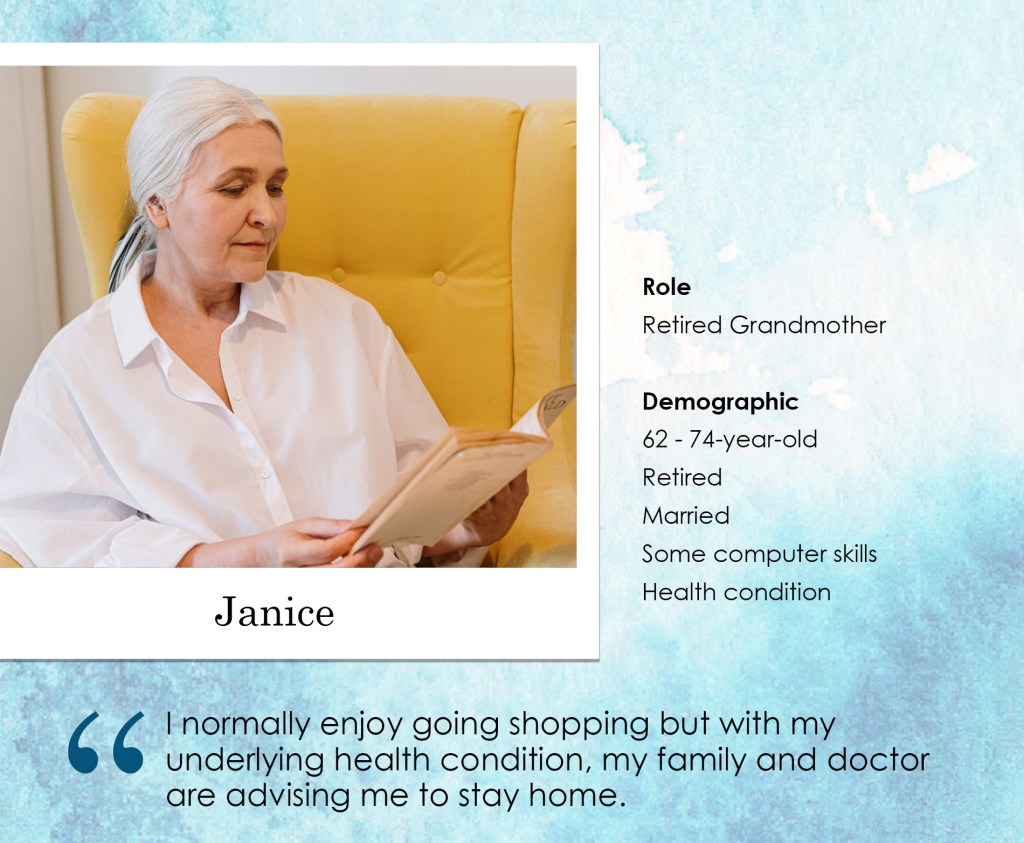
My second persona is of Janice, a 65-year-old woman whose doctor recommended she stay away from public spaces. However, she enjoys shopping and cooking, so she is trying to cope with her new situation. By recommendation of friends and family, she started using the Stop & Shop app and has her groceries delivered. In my research, I found many boomers are facing the same issue, and online shopping as a whole has taken off. Many boomers are comfortable using computers, smartphones, and, more recently, social media apps. Although they would not be classified as ‘technologically savvy,’ Stop & Shop developed a simple, easy-to-use app that is manageable for a boomer.
Using the weapon
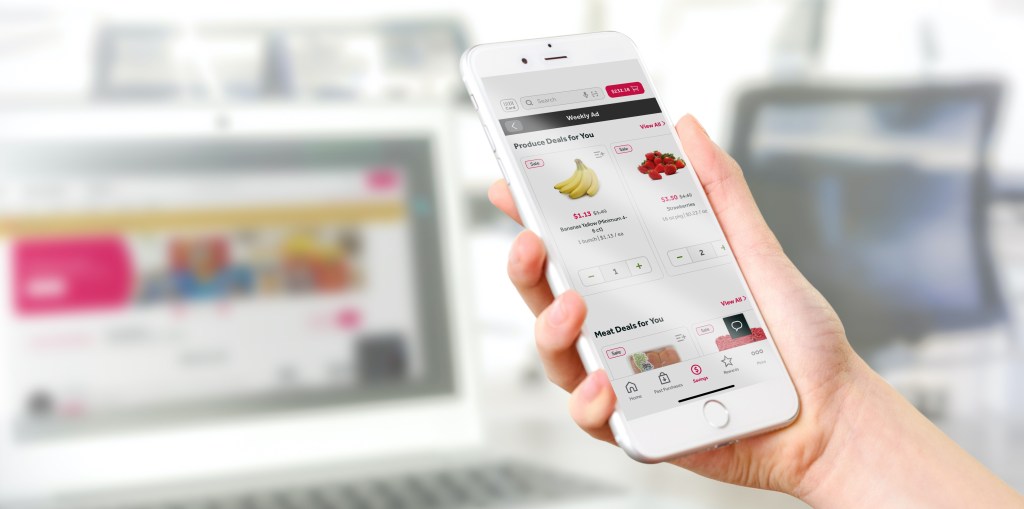
From children to the elderly, everyone needs groceries. Using multiple personas, companies like Stop & Shop can find that many people see grocery shopping as a weekly burden or something that can jeopardize their health. The app Stop and Shop developed recognizes both of these needs and successfully creates a pleasant user experience. Users can get their shopping done quickly, and if they forget something, they can easily add it to their shopping cart safely from wherever they are- even the couch.
Many businesses understand the value of personas and spend tens of thousands of dollars conducting in-depth research to create accurate, meaningful customer representations. These personas give businesses insight into their consumer. When teams work together and keep the user front and center, the likelihood of creating a successful product is greater. Personas are the secret weapon to creating successful products that place user’s needs first.
Click here for my complete personas
References
Herrick, M. (2020). Why E-retailers Should Lend Baby Boomers a Hand During the COVID-19 Pandemic. Retrieved from https://www.digitalcommerce360.com/2020/05/29/why-e%E2%80%91retailers-should-lend-baby-boomers-a-hand-during-the-covid-19-pandemic/
Interaction Design Foundation. Personas. Retrieved from https://www.interaction-design.org/literature/topics/personas
O’Conner, K. (2011). Personas: The Foundation of a Great User Experience. Retrieved from https://uxmag.com/articles/personas-the-foundation-of-a-great-user-experience
Ralph, B. (2017). Creating Personas. Retrieved from https://medium.com/beakerandflint/personas-74c4e1c12ee2
SKULocal.com (2018). The Online shopping Habits of Today’s Baby boomers. Retrieved from https://www.skulocal.com/insights/the-online-shopping-habits-of-todays-baby-boomers/
Sauro, J. (2012). 7 Core Ideas About Personas and the User Experience. Retrieved from https://measuringu.com/personas-ux/
Usability.gov. Personas. Retrieved from https://www.usability.gov/how-to-and-tools/methods/personas.html
 To Mulberry Street Marketing & Design
Leave a comment