
As designers, we all strive to create the perfect app, website, or product that is perfectly intuitive and makes the client pleased. We hope our idea wins the best awards, and it makes us feel like Ralphy from The Christmas Story, who dreamed he received an A+++++ on his homework assignment.

However, the reality is that we struggle with developing the best solution for a product. How does one come up with a solution that positively impacts the user and benefits the organization making the request? The simple answer is through User-Centered Design (UCD). Good designers take the time to research, analyze and learn more about the users and the project stakeholders. Products that have made an impression on people like the computer mouse, smartphones, and even wheelchairs all started with UCD.
In this blog post, I explain two principles of UCD. First, the Product Development Lifecycle and how it helps designers find the most effective solutions for a new product. Second, Iterative Design and why it’s important to prototype several ideas and test them to see if they work.
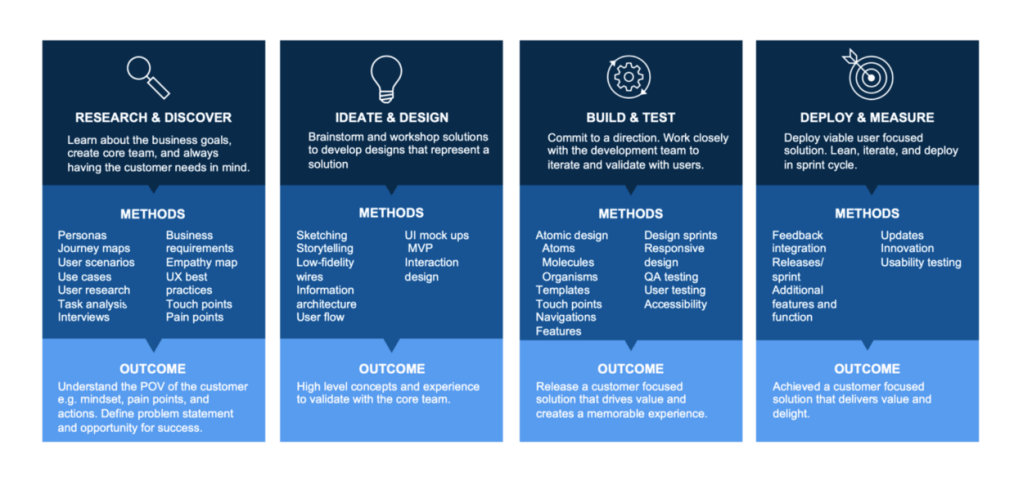
Diving into the Product Development Lifecycle Process
Phase 1: Research
The Product Development Lifecycle (PDL) is roughly four phases that designers/engineers/developers ‘cycle’ through as they work on a new product. The first phase is Research & Discover, where a designer would research competitive products, spend time learning about the users, create personas, and begin to formulate a plan.
Amos Winter, a mechanical engineer, found there were people in developing countries who could not get from place to place in their wheelchairs because they could not get through the rough terrain. Through competitive analysis, Winter found some wheelchairs had this ability using a mountain bike gear train, but it was far too expensive. Winter also spent a lot of time with people who relied on wheelchairs; he observed their struggles, listened to their stories, and considered their ideas. Finally, through empathy and analysis, Winter defined the problem and began formulating ideas for a low-cost, all-terrain wheelchair.
Phase 2: Design
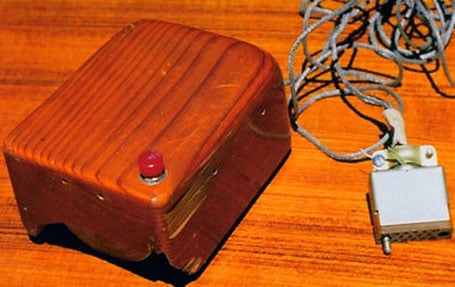
Determining specifications, brainstorming, sketching, prototyping, and evaluating potential designs happen in the second phase of the Product Lifecycle. In this phase, Douglas Engelbart and William English, creators of the computer mouse, created various tools to make a cursor move on a computer screen. They were specifically looking for ways for people to interact with a computer that was not the keyboard. They prototyped a light pen, a joystick, and a mouse, among other things. Then users were given simple tasks to perform and were timed on how long it took them to move the cursor on the screen. The mouse outperformed all other models.
With their learnings, Engelbart and English began to modify the mouse and improve on their original design. They moved the wire from the front to the back of the mouse so it was not in the way of the user’s wrist; they changed materials from wood to plastic. These two inventors used the Principle of Iterative Design to create, modify and test over and over, learning something new with each iteration. They did this until they had a product worthy enough to share with the world.
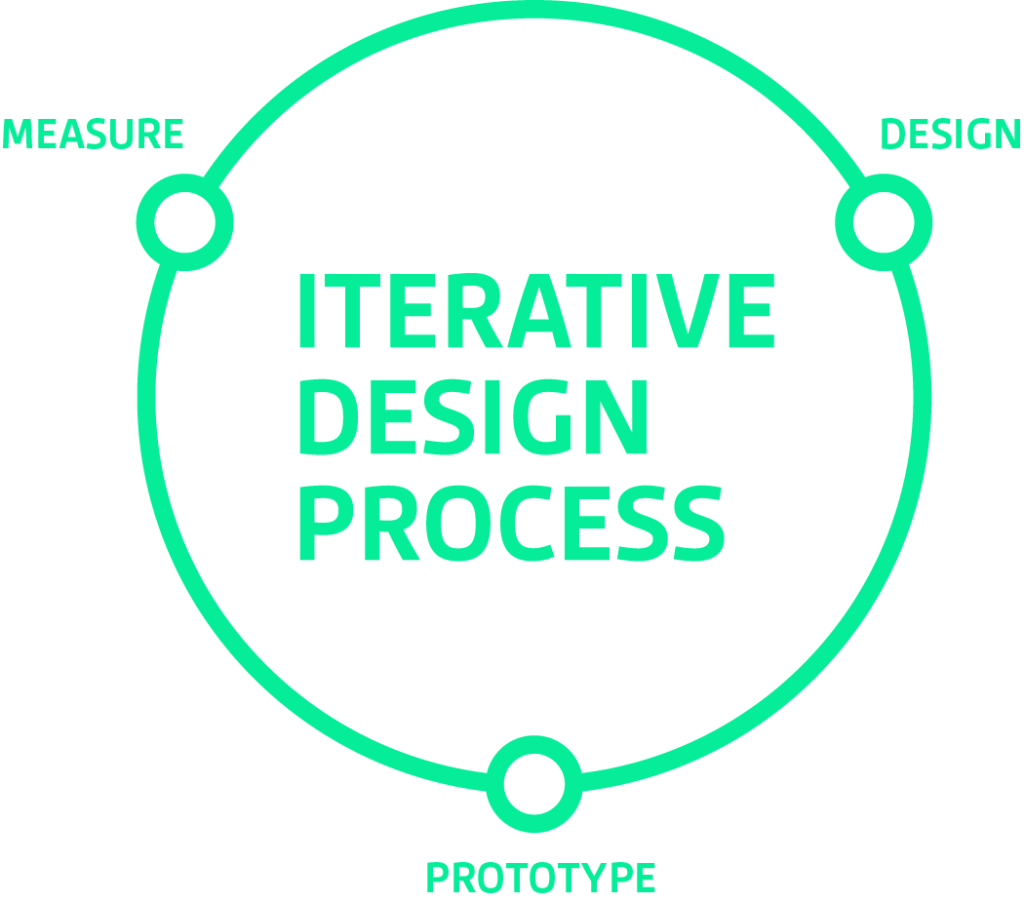
Design, Test and Do It Again
Iterative Design allows designers to get their ideas for a product out of their heads and in front of users to gain valuable feedback. With the feedback gained, designers can see their prototype in action to see what’s working and not working, then make adjustments. This process continues until the team is satisfied. One of the most significant benefits of Iterative Design is that people don’t know how they’ll react to a product until they see and try to use it. Getting this feedback early in the process, before the final product, save companies time and money in development and production. Not only is it cheaper to create prototypes and test multiple times, but the likelihood of creating a successful, helpful product is far greater.
“Great design is the iteration of good design.”
M Coblani
Phase 3: Development
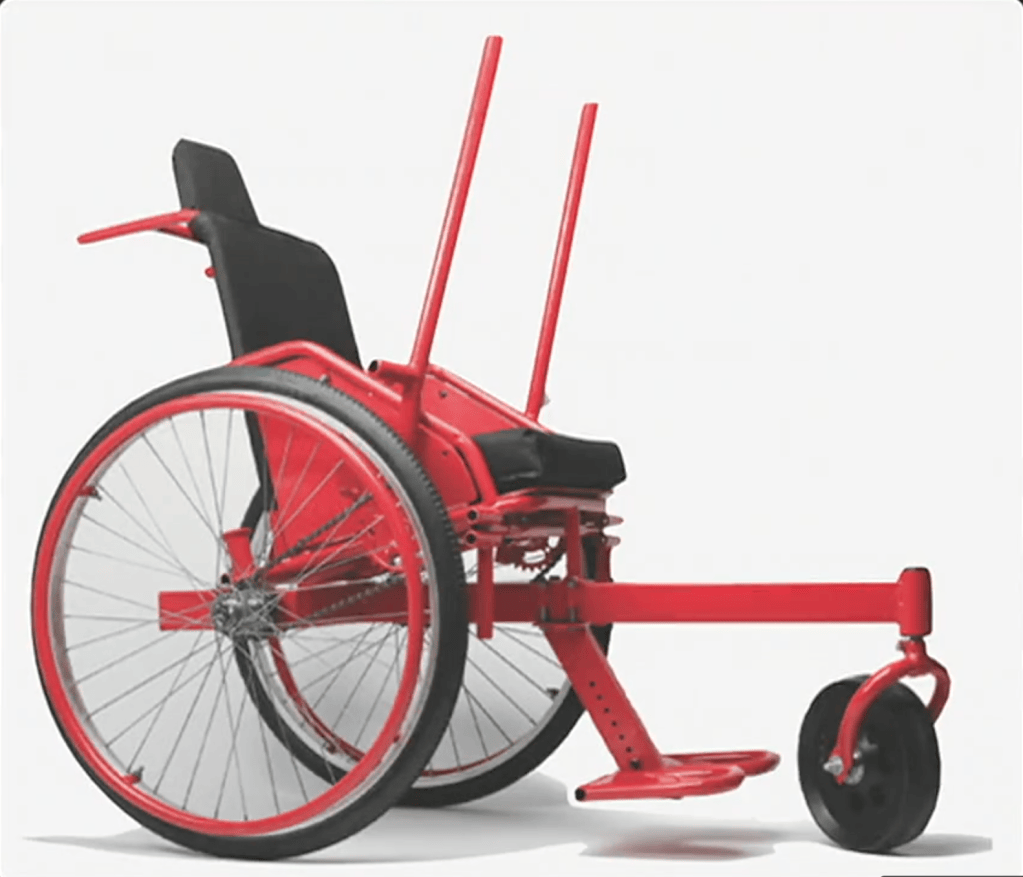
After research and design come development, the phase in the Product Development Lifecycle where the product is built. Returning to the example of Winter and the all-terrain wheelchair, in this phase, Winter worked to source cheap and easy-to-find bicycle parts to develop his new product, the “Leverage Freedom Chair” (LFC). With the first product created, Winter and his team found it was 80% faster and 40% more efficient than a standard wheelchair. With these metrics, he was confident enough to start mass production of this new innovative wheelchair.
Phase 4: Release
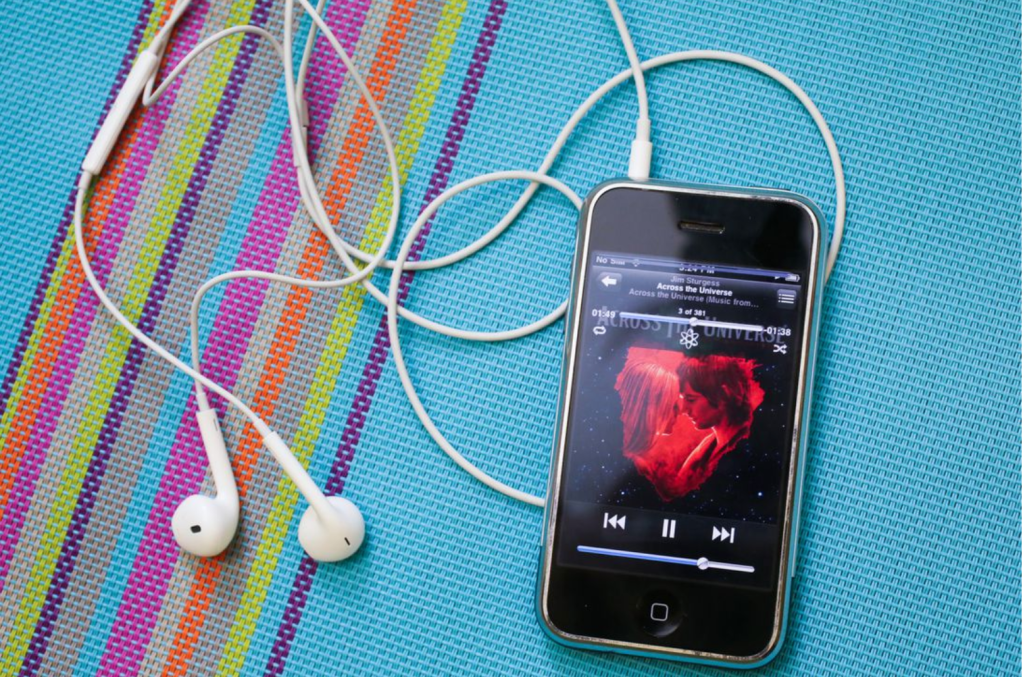
There is no such thing as a product being finished; however, at some point, it is released to the masses. Although the product is out in the world, user feedback continues with surveys, field tests, and interviews. Think about the smartphone; the first iPhone was released in 2007 with only one size option, one camera, and 15 apps. Today, the iPhone is now on its 15th model; it comes in a variety of colors and sizes and has countless apps. It also spurred the development of competitive smartphones. Throughout the fifteen years of the iPhone, Apple released a version, studied user interaction, and improved its design repeatedly.
Why is the Product Development Lifecycle So Important?
Expertly put by three user experience researchers, “No one gets all of the information the first time, no matter how expertly you execute each user research activity.” (Baxter, Courage, Caine) Designing well is a process. The cycle of gaining feedback and making changes brings the designer closer to a more positive experience.
Using the Product Development Lifecycle will make it more likely to receive A++++’s for your users, so you won’t have to fantasize like Ralphy.

Reference
Baxter K., Courage C., Caine K.. (2015). Understanding Your Users: A Practical Guide to User Research Methods (Second Edition). Elsevier Inc.
Computer Mouse – Complete History of The Computer Mouse. (2021). History Computer. Retrieved from:
Design iteration brings powerful results. So, do it again designer! (2021). Interactioin Design Foundation. Retrieved from: https://www.interaction-design.org/literature/article/design-iteration-brings-powerful-results-so-do-it-again-designer
Holland, Patrick. (2022). The iPhone at 15: Steve Jobs Revealed his Greatest Product in 2007. C|Net. Retrieved from: https://www.cnet.com/tech/mobile/the-iphone-at-15-steve-jobs-revealed-his-great-product-15-years-ago/
Nguyen, Tuan C. (2021). The Brief History of Smartphones. Thought Co. Retrieved from: https://www.thoughtco.com/history-of-smartphones-4096585
Winter, A. (2012). The cheap all-terrain wheelchair. TEDxBoston. Retrieved from: https://www.ted.com/talks/amos_winter_the_cheap_all_terrain_wheelchair?language=en
 To Mulberry Street Marketing & Design
Leave a comment