
{Stop Motion I}
READING & WRITING
It’s often the unpaid personal projects that will further your craft, keep the creative fires burning, and if you’re lucky lead to even bigger things in your career.”
Liz Blazer, Animated Storytelling
The above quote resonated with me. As someone who has worked at the same job for many years and is now tired of the same routine, I took it upon myself to go back to school and try new things to help “further my craft.” In my case, the quote could be rephrased to say, “to further my craft, pay for someone to help you.” (Thank you Quinnipiac University.) All kidding aside, I’m here to experiment and try new things, so in my blog post, I will be explaining how I am preparing for my first stop motion animation sequence.
To begin, I have been reading Liz Blazer’s book, Animated Storytelling, to use a guideline. Blazer stressed the importance of preparing for your story. Figure out the theme, plot, type of narration, and if it will have a linear or non-linear story structure, etc. Once the story has been settled, begin storyboarding and figure out the timing.
The Importance of Color
As the storyboard develops, it’s time to consider the overall color theme of the animation. Color subconsciously carries a lot of meaning, from dark hues that give off an ominous vibe to bright saturated pieces that communicate happiness. When creating a storyboard, decide on which color to carry throughout the entire story as it will affect the overall mood of the animation. Blazer states many experienced animators suggest limiting the color palette because too many colors can be a distraction. Instead, choose a limited palette with only one accent color. Then play with the saturation and value to bring select objects in and out of focus. For example, desaturate the background, so viewers focus on the action in the foreground. For special key moments in the animation, use your accent color to enliven the story.
Animation Experimentation
With a complete colored storyboard, move on to experimenting with different mediums to animate them. Try something you’ve never done before. While challenging yourself, tell yourself to create “bad” art. This way, the mind is not fixated on making everything perfect.
Blazer encourages the reader to “work on the edge of their skill set,” meaning push yourself in ways you haven’t before. An excellent example of an artist pushing himself is John Morena, who decided to create 52 experimental tests. In other words, he challenged himself to create something new every week. His results were stunning, and a number of his stories were featured in international animated film festivals. Watch his work here:
RESEARCH TO INFORM
After being inspired by John Morena and reading about the importance of color and testing your creative boundaries, I began to dig online for some stop motion animation.
The dramatic lighting and set design drew me into this stop motion animation. I appreciate the variety of characters. The repetitive actions and the increase in speed makes the story very amusing. There are a few mildly graphic scenes that would make a child laugh.
This stop motion animation is all about sound effects. I love the use of classic arcade game music and the reinvention of arcade game graphics. I can watch this a million times.
One of my favorite story techniques is when the audience can see a person’s imagination. In If I Was God, the main character describes his 7th-grade classroom, and we can all relate to the feelings he has towards his other classmates. I also laughed out loud when he electrocutes himself.
The simplicity of this stop motion animation is so brilliant. This is one of those pieces where I wish I had thought of it first. I like that the houses all form from one piece of paper. I can tell there was a lot of thought that went into this short.
I truly appreciate when an advertisement is so successful in selling the brand, you forget it’s a TV commercial.
CREATIVE
Willing yourself to create something is not easy at all! After scribbling ideas all over my desk, I had to walk away. I then scoured books and read poems in hopes that ideas would spark. Finally, it was a simple book title that spurred my imagination. I created two unique story concepts.
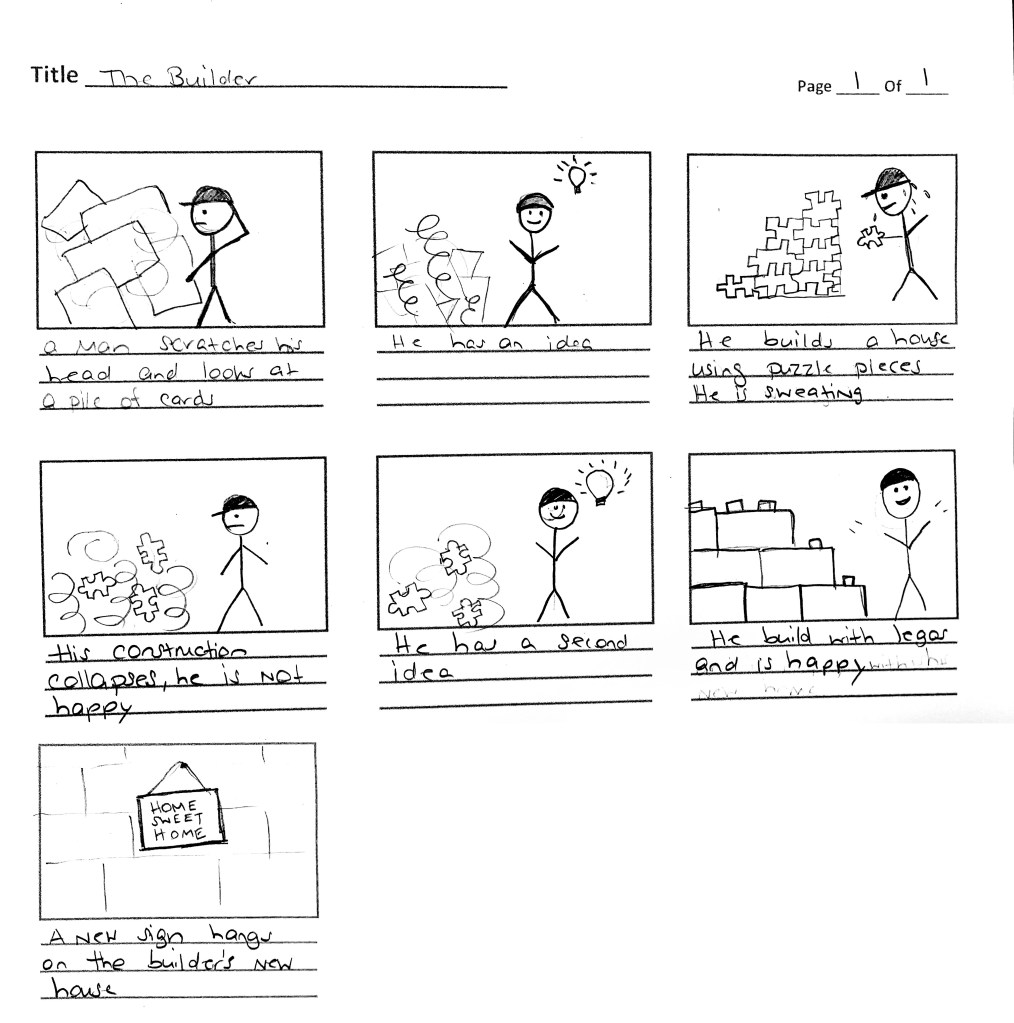
The first I’m calling The Builder and have drafted a complete creative brief along with a storyboard.
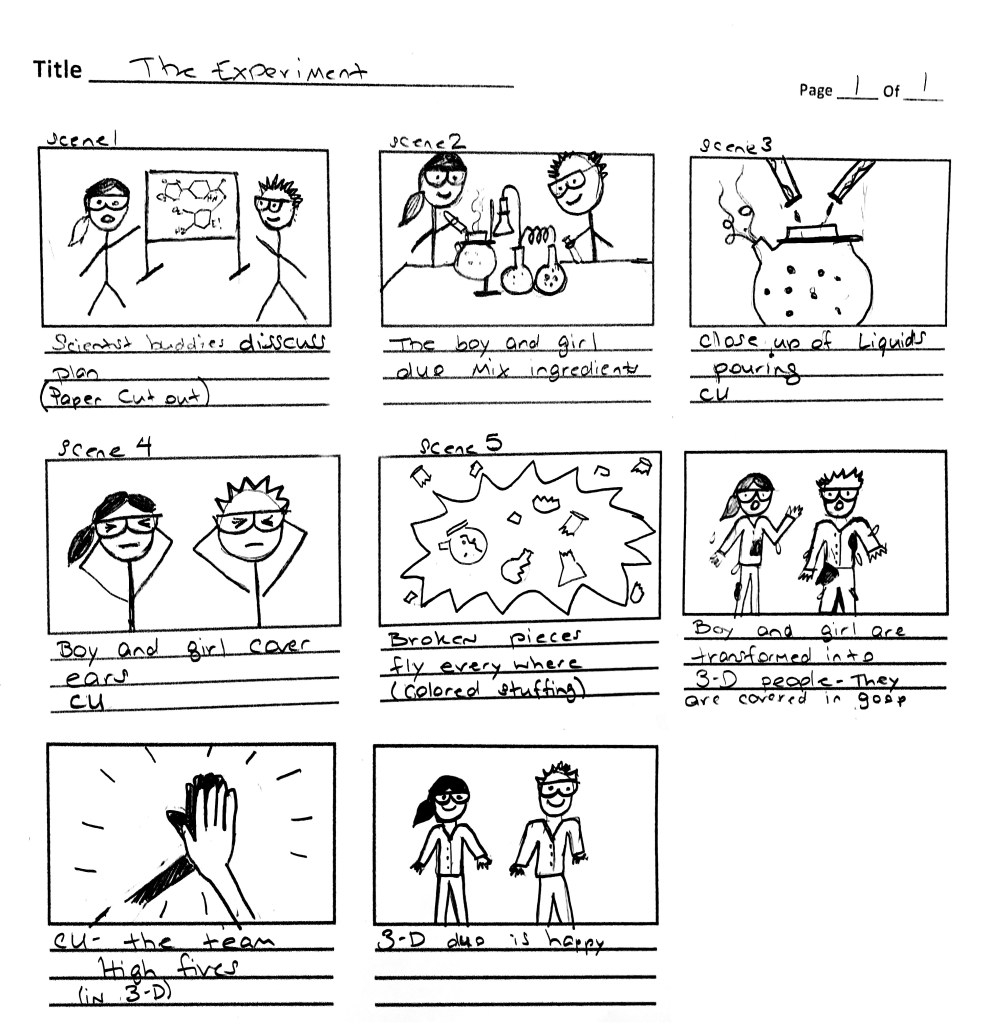
The second story I created is one I am most excited about and scared to make. But as Blazer states: “It’s in the uncomfortable process that you may find the key to your artistic greatness.” I’m calling my second story The Experiment. Here is the line to the creative brief that explains the story.
My fear in creating this piece stems from the fact that I’ve never done this before, and I’m not confident in my drawing or sculpting abilities, but this idea is stuck in my head, and I feel I must try. Before truly diving deep into my animation, I created a test version. I learned a lot from these mere six seconds. I have to make more subtle movements to make sure I can achieve 24 frames per second. I also need to stick things down better, so they don’t move so much.
Wrapping Up
After all of my research and everything I’ve learned so far, I’m excited to create my first stop motion animation. I plan to finish my final drawings soon and shoot my entire 60-second animation in one day. I feel this would be best so that my mindset and the lighting are the same throughout. Wish me luck!

 To Mulberry Street Marketing & Design
Leave a comment